
The IBF has filed its Reply Brief in opposition to Jai Opetaia’s opposition to Motion to Dismiss. The IBF contends that Opetaia did not follow the rules afforded to him by the IBF.
Opetaia claims, according to the IBF, come down to its decision not to sanction his Zuffa bout last spring and the subsequent stripping of his title after he decided to fight. Opetaia fought Brandon Glanton and it was to be for his IBF cruiserweight title. However, the IBF decided not to sanction the fight. Opetaia does hold The Ring cruiserweight belt which Zuffa Boxing recognizes.
Opetaia sued in July claiming a breach of contract, bad faith, fraud among other claims. As with its Motion to Dismiss, the IBF argues in its Reply Brief that Opetaia did not follow the IBF rules of seeking an internal appeal prior to filing the lawsuit.
Despite the fact Opetaia claimed in his opposition brief that the need to “exhaust” all remedies prior to filing a lawsuit does not apply, the IBF cites case law where exhaustion is necessary in making a contractual claim. Moreover, Opetaia argues that he did not have to exhaust the remedies because the claims are based on the IBF’s decisions outside of the contract. But, the IBF argues that the claims are based on the IBF rules.
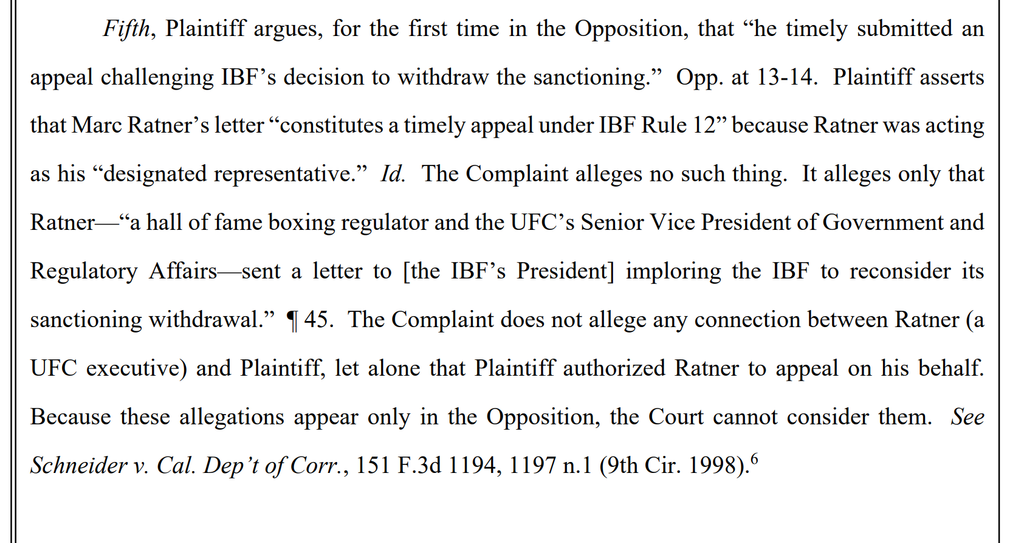
Notably, the IBF addresses the claim that a letter from Marc Ratner as the “designed representative” of Opetaia satisfied the appeal. However, the IBF denounces this allegation stating there’s no connection between Ratner and Opetaia or there was any notion that he was the boxer’s representative.
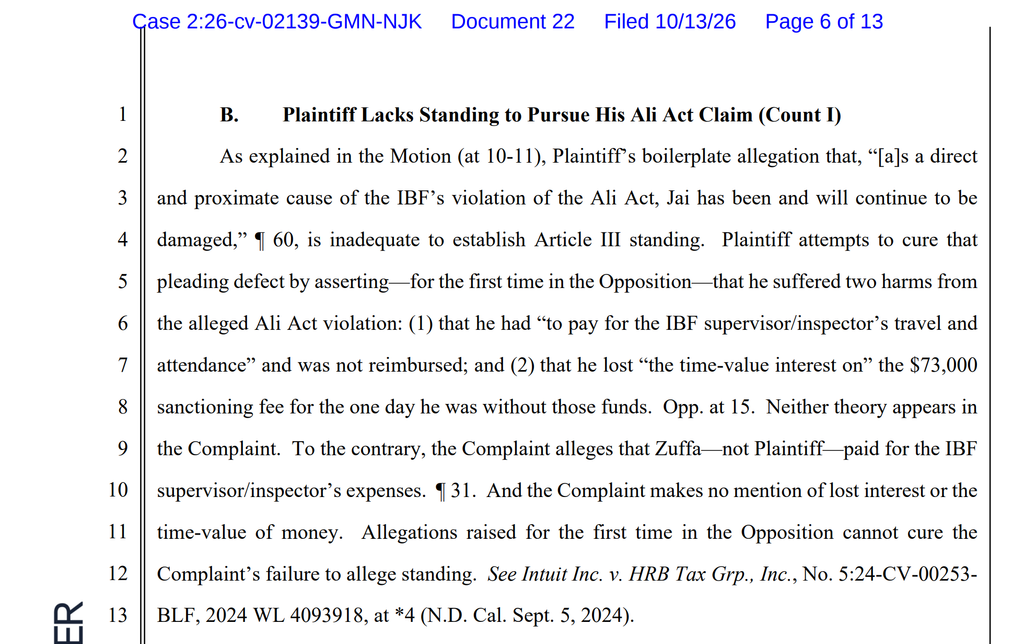
As with this allegation, the IBF claims that Opetaia brought up a new allegation in his opposition brief related to the Ali Act claim. Notably, he had to pay for the IBF supervisor/inspector’s travel and the “time-value interest on” the $73K Opetaia first paid for the IBF sanctioning fee prior to the IBF withdrawing its support. The IBF returned the money but Opetaia is claiming the damage.
The court has yet to notify the parties on whether there will be an oral argument in this matter. The IBF makes strong arguments in its case against Opetaia. Certainly, it is unfortunate that the IBF originally was going to sanction the fight but decided to withdraw its support. But, its clear that Opetaia should have appealed to the IBF prior to filing this lawsuit. While he may argue that the appeal would have been futile, the case law would suggest he had to do it.
The lawsuit highlights the issues that Zuffa Boxing will have with the rest of the boxing industry. We have seen with the Tyson Fury-Anthony Joshua fight that promoters and sanctioning bodies are going to have issue with Zuffa Boxing as it seeks a foothold in the support. While Dana White thought taking over boxing was going to be easy, its not. This lawsuit shows the apprehension sanctioning bodies have with working with Zuffa.
Leave a Reply